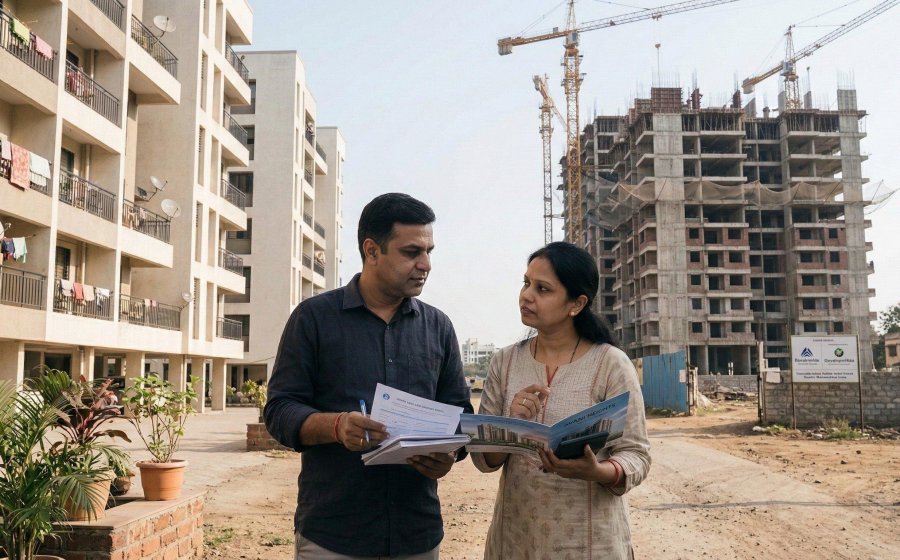
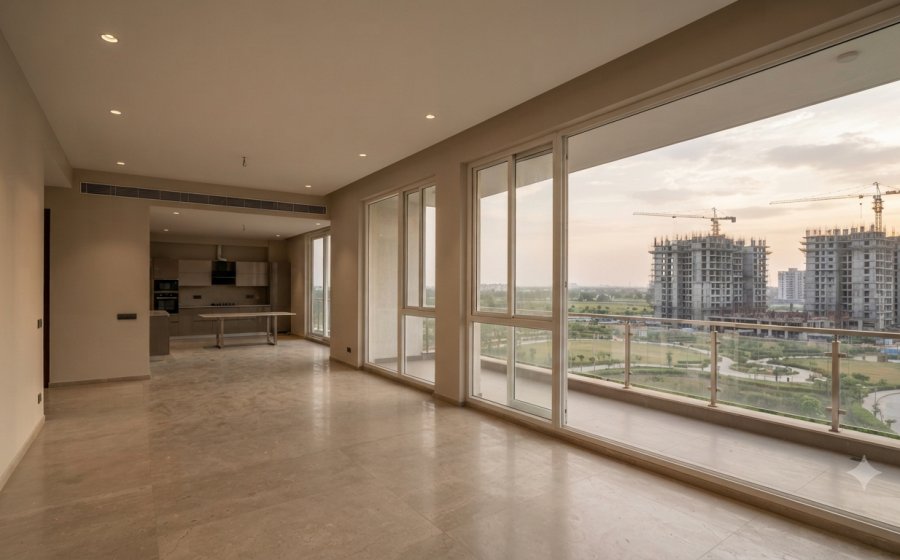
A structured way to compare two or three shortlisted projects in Greater Noida West without getting lost in brochures and sales pitches.
Once you've narrowed your search in Greater Noida West to two or three projects, comparing them fairly can be surprisingly difficult. The problem isn't usually a lack of information. It's that every developer presents information differently. One may quote a price per square foot on super built-up area, while another highlights a "starting from" price applicable only to its smallest unit. One brochure may emphasise amenities, while another focuses on location or possession timelines. Before you can compare projects meaningfully, you need to normalise the information and look at the same parameters for each.
At a minimum, compare:
Location and sector
Developer / builder
RERA registration number and current status
Total land parcel
Number of towers
Available configurations
Carpet area, rather than relying only on super built-up area
Actual price range
Current construction and possession status
Open / green area as a proportion of the total land parcel
Using the same structure for every project makes differences much easier to identify. It also prevents a brochure's presentation style from influencing your comparison.
Two projects with similar quoted prices per square foot are not necessarily comparable on value. A project with a smaller land parcel and a higher number of towers may have a very different built density from one spread across a larger site with fewer towers. That can affect the amount of open space available, tower spacing, internal movement and the overall experience of the development. So don't stop at the headline ₹/sq. ft. figure. Look at land parcel size, number of towers, built density, open area and tower spacing together. And make sure you are comparing the same area basis and, wherever possible, the same type of unit.
A new-launch project from a developer with a strong, verifiable delivery history is a different proposition from a new-launch project where there is limited local delivery history.
But construction stage matters too. A project approaching possession has more of its execution already visible and therefore less construction still ahead of the buyer. An early-stage project, meanwhile, leaves a longer construction runway during which timelines and the final on-ground product still have to materialise. The useful question isn't simply "Which builder is better?" It is: What is the combination of developer track record, current construction stage and remaining execution risk for this particular project?
A brochure may show a clubhouse, swimming pool, sports facilities, landscaped areas and other amenities planned for the completed development.
That doesn't necessarily mean all of them are operational when you buy.
For an under-construction project, ask:
Which amenities are complete?
Which are currently operational?
Which are still under construction?
Are any facilities part of a later phase?
What is the expected timeline for the remaining amenities?
Where possible, verify these things during a site visit rather than relying entirely on marketing material.
Not every meaningful difference can be reduced to a number.
For example:
How existing residents describe the builder's post-sales responsiveness
How effectively the project is being managed after handover
The quality of maintenance and common-area upkeep
How the developer has handled issues in earlier projects
What is actually developing around the project
How the surrounding sector could evolve over the next five to ten years
These are areas where conversations with existing residents, visits to completed projects by the same developer and independent local research can provide useful context.
They should complement — not replace — the objective comparison.
A practical approach is:
1. Shortlist no more than three projects.
Start with projects that already fit your budget, preferred configuration and purchase timeline.
2. Normalise the numbers.
Put the same objective fields side by side and make sure you're comparing like with like.
3. Verify the important claims.
Check RERA information, construction status, possession commitments and other material details rather than relying solely on brochures.
4. Visit your final one or two projects.
Look at the actual surroundings, construction progress, access, site conditions and — where possible — completed developments by the same builder.
5. Then assess the trade-offs.
Consider which differences actually matter to your priorities, rather than trying to find a universally superior project. Sometimes the conclusion will genuinely be "no clear winner." That isn't a problem. It may simply mean that the projects suit different priorities — for example, one may offer earlier possession while another offers a different configuration, location advantage or entry point.
At CLARYS, we don't approach a comparison by declaring a single "best" project or assigning scores to different developments. The reason is simple: different buyers can reasonably arrive at different conclusions from the same information. One buyer may prioritise immediate possession. Another may be comfortable with a longer construction timeline. Someone else may place greater importance on location, apartment size, density or the surrounding area's development. Our role is to make those trade-offs easier to see — using consistent information, independent checks and on-ground context — so that you can make the decision based on your priorities, not ours.
Want a personalised read on how this applies to your own plans?
Book a Free ConsultationMarket updates, new listings and investment insights — follow along on your platform of choice.
25 mistakes home buyers make — and the checklist our advisors use before recommending any property.
Your guide is on its way. A CLARYS advisor may also reach out to help with any questions.