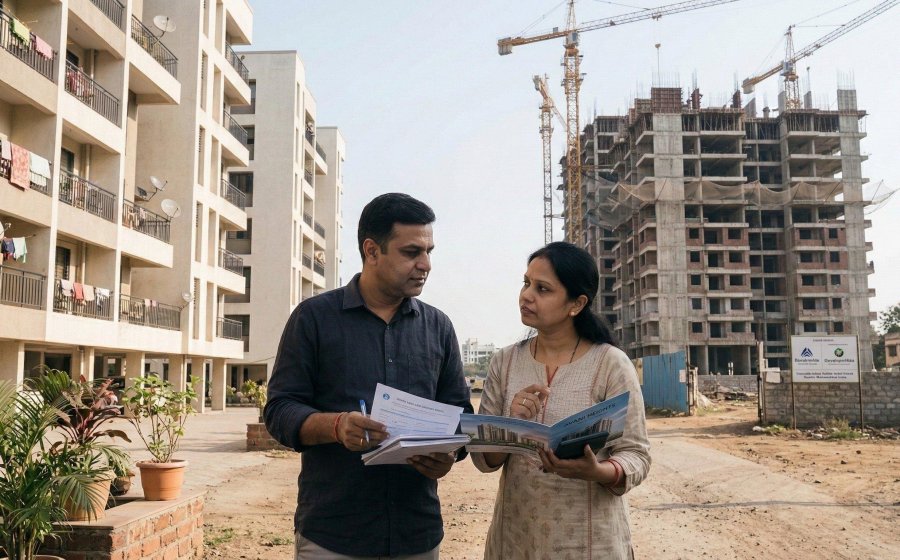
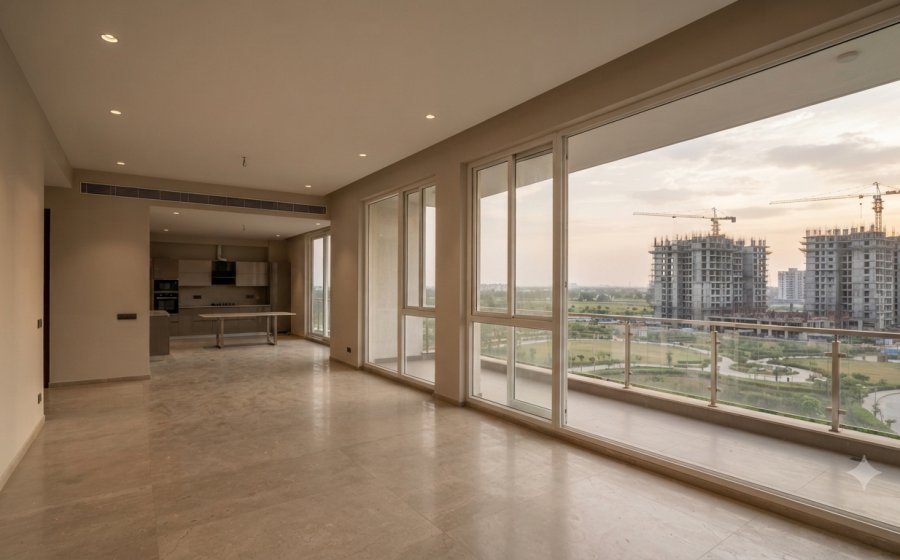
Greater Noida West isn't one uniform market — its sectors differ in how developed they are, what's already built, and what kind of buyer they typically suit.
Parts of Sectors 1, 3 and 4, along with other mature stretches, offer a relatively established residential environment. Here, buyers have greater visibility into actual occupancy, surrounding development, daily convenience and the experience of living in the area. The advantage is fairly straightforward: there is less that you need to imagine. You can assess what exists today rather than relying heavily on future plans. For an end-user planning to move in within a relatively short timeframe, this can be particularly attractive. The trade-off is that a more established environment may already carry some premium because buyers are paying for greater certainty.
Sectors 4, 16B and 16C have another characteristic that matters — the presence of large residential communities and a substantial existing housing ecosystem. For families, this can create an important advantage. Schools, retail, daily services and neighbourhood activity tend to become more meaningful once a significant population is actually living around you. The opportunity here is not necessarily about being the earliest buyer into an emerging location. It is about benefiting from an ecosystem that is already taking shape. The key consideration is to look beyond the size of the township and evaluate the individual project's construction quality, maintenance, density and long-term positioning.
Techzone 4 and parts of Sector 2 represent a somewhat different proposition. Their appeal is closely linked to accessibility, residential activity and the growing commercial ecosystem around them. For buyers who place a high value on connectivity, convenience or potential rental demand, these locations can be particularly relevant. A more active environment can also mean greater day-to-day convenience as businesses and services continue to develop. The consideration here is simply that activity comes with its own character. Buyers should think about traffic, density, project positioning and the kind of living environment they actually prefer rathe r than assuming that greater activity automatically means better value.
Sectors 10 and 12 represent a newer phase of residential development, with a growing selection of contemporary projects and larger-format homes. The attraction is easy to understand: buyers get access to newer products, modern amenities and the possibility of benefiting as the surrounding neighbourhood becomes more established. The trade-off is equally important. When buying into a developing pocket, part of the decision is inevitably about what the area will become, not just what it is today. That makes project selection, construction progress and the credibility of surrounding infrastructure plans particularly important. For buyers with a longer horizon, however, this evolving character can be an opportunity rather than a drawback.
There is no single answer — and that is precisely the point. If immediate livability and greater certainty are priorities, established residential pockets may deserve more attention. If community, family convenience and an existing residential ecosystem matter most, the larger township-led pockets can be attractive. In case connectivity, accessibility and an active neighbourhood environment are important, the connectivity-led pockets may be worth exploring and if you are comfortable with a longer development horizon in exchange for newer housing and the potential of a maturing neighbourhood, the newer development pockets can make sense. The important point is that each cluster solves a slightly different buyer requirement.
Greater Noida West is becoming a collection of distinct residential micro-markets rather than one uniform housing market That is actually a positive for buyers. It means there is more choice — but also more need to match the location to your own priorities. The right question is therefore not: “Which is the best sector in Greater Noida West?” It is:“Which type of residential environment suits the way I want to live, invest and hold the property?”
Once that is clear, choosing the right project becomes a much more meaningful comparison.
You First. Always.
Want a personalised read on how this applies to your own plans?
Book a Free ConsultationMarket updates, new listings and investment insights — follow along on your platform of choice.
25 mistakes home buyers make — and the checklist our advisors use before recommending any property.
Your guide is on its way. A CLARYS advisor may also reach out to help with any questions.